Internet marketing has obviously been talked and written about a lot over the last ten years and more.
One of the aspects of most of these discussions that fascinates me is that Internet Marketing is usually talked about as if it is just a further marketing and sales channel, in line with TV, Radio, Print media etc. This is very intriguing, because I think this is both right and wrong at the same time. Here is why.
The Internet obviously enables a company to advertise and sell its products and services. For advertising, think banner ads (very reminiscent of print ads, by the way). Obviously, you can also buy things online, Amazon and others come to mind. But that is not all.
Let me put it like this. These days, before I make any meaningful purchase decision, I go on the Internet to check out my options and to become informed. This is true for both personal and professional puchases. So, for example, before I buy a computer, I will spend a certain period of time on the Internet to check out all the options, read the reviews, got the the manufacturers’ websites, etc. After I have done this, I will go to the place where I will purchase, this place can either be offline or online. To me, this means the following:
All roads lead to the Internet
What does that mean? Let me explain it by example. I hear a radio ad on a product, I go on the Internet to check it out. I see a TV spot, I go on the Internet. I see a print ad, I go on the Internet. A friend tells me about something, I go on the Internet. I see a banner ad online, I go further on the Internet.
This fundamentally changes the role of marketing and of advertising
In the old days, you would advertise, so that either people went out of their way (they called, they went to the shop) to go and get the product or that when they chance encountered it (had to select one soap in the supermarket, chose one soap over the other) they selected the product they felt better about. Yes, you could read magazines and reviews and try to form an opinion, but this was a difficult and laborious process.
Today, people go and check things out online (I admit, buying a burger, ie impulse purchases are somewhat different than considered purchases, like buying a PC). This means that the conection between advertising and product purchase is broken in many industries. This means that regardless of where you advertise, the next step for the buyer is very likely to go online, become informed and THEN to go and purchase the product: All roads lead to the Internet.

I think this has some pretty substantial implications for marketers: Whatever the messages are that you send via traditional and more modern channel, they will get modified and changed by whatever your buyers find online. This means that the messages that can be found on your company and on your products online are at least as important, if not more important than the messages that you send out via channels. This becomes even more important, when the majority of content on your company that can be found on the Internet origniates not from you, but from 3rd parties.
An additional consideration is that the role of advertising has partially changed. Ads lead to online visits. This means that you cannot design any advertising campaigns anymore, without knowing exactly how they integrate with the Internet, because they will invariably lead to it.
A practical example: I watch a TV spot on a new car. It talks about some new cool features that it has. I think: this is pretty cool, I should check this out on the carmaker’s homepage. I go to the homepage, but all I find is a ton of videos (some of which I had already seen on TV), but it is impossible to find the information on the new features that they talked about. I give up, being frustrated.
I think one could think this through even further and start with the needs of the buyer, develop an online programme that meets those needs and then to develop TV ads, for example, that drive people online. This is the new role of Internet marketing as I see it: providing the linkage between advertising and the company itself.


 While I have been working on a number of new posts, I found out that there is not only good marketing and bad marketing, there is also something that I would like to call “anti-marketing”. This is to mean messages sent out by a company that effectively destroy reputation and brand image. In one word: this is the antithesis of what marketing is supposed to achieve.
 There is a very interesting blog that reviews the history of successful start-up companies. Unsurprisingly, the blog is called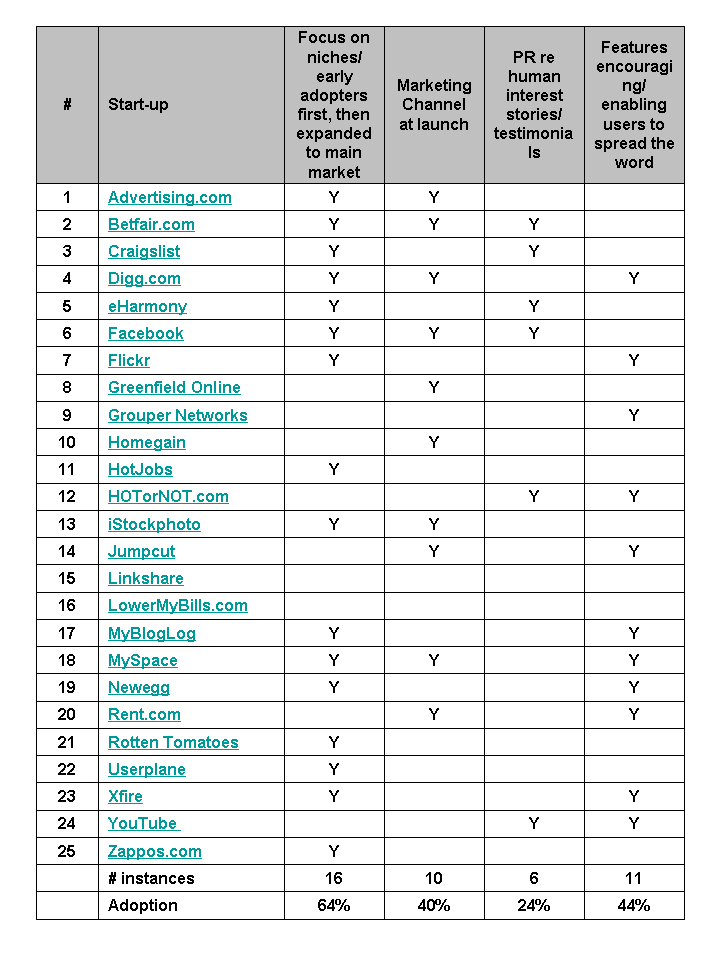
 Founders View