Online Marketing Example with a Halo

After I slammed Microsoft in an earlier post for their bad marketing efforts related to Windows Vista, I have today come across a great example of online marketing by Microsoft, if only it was online marketing by intent…

Halo 3What I am referring to is the great marketing effort by Microsoft Games for its newest Xbox 360 blockbuster video game Halo 3. Although I am not that much into ‘shooter’ games, even I couldn’t evade all the buzz surrounding the game. Anyway, what I was more interested in than the game itself was how it was marketed. Take a look at the videos below:

[http://www.youtube.com/watch?v=cjLuqfb-1-4]

These five clips from part of a Microsoft television ad campaign. That’s right, a TV campaign. So why am I talking about them in the context of online marketing? What happened with these clips is akin to what I talked about in my last post: all ways lead to the Internet.

Although initially shown on TV, these clips were ultimately uploaded to YouTube. If you look closely, you will find that the descriptions in the titles of the videos etc show that these clips were most likely not uploaded by the Microsoft Games marketing team, but rather by enthusiasts, but this is obviously an assumption. So, here you have a big company making some, arguably, very intriguing clips, paying probably a lot of money to have them broadcast on TV (I wouldn’t argue against that, actually), only to find them on the Internet, where they probably belonged in the first place.

The essence of this post is this: Combined, these four videos above and the many many copies that exist of them on YouTube alone, have been watched by several million people by now. This cost Microsoft nothing (at least not in addition to having produced the clips). Most importantly, these people watched these videos, because they wanted to watch them. Think about it, this is highly targeted, relevant, opt-in ad watching. And its free. And that, to me, is the beauty of great online marketing.

Additional thoughts:

In essence, I think that all TV ads should probably be uploaded on YouTube by the producers. Why? It costs next to nothing to do that, so little harm done. People might pick it up, they might forward it to their friends, incorporate it in their blogs etc. If these videos are on YouTube, they might go viral amongst people who care about them. If they don’t, little is lost, I can only see a potential upside of doing it, but no downside.

Zemanta Pixie

The Role of Internet Marketing

Internet marketing has obviously been talked and written about a lot over the last ten years and more.

One of the aspects of most of these discussions that fascinates me is that Internet Marketing is usually talked about as if it is just a further marketing and sales channel, in line with TV, Radio, Print media etc. This is very intriguing, because I think this is both right and wrong at the same time. Here is why.

The Internet obviously enables a company to advertise and sell its products and services. For advertising, think banner ads (very reminiscent of print ads, by the way). Obviously, you can also buy things online, Amazon and others come to mind. But that is not all.

Let me put it like this. These days, before I make any meaningful purchase decision, I go on the Internet to check out my options and to become informed. This is true for both personal and professional puchases. So, for example, before I buy a computer, I will spend a certain period of time on the Internet to check out all the options, read the reviews, got the the manufacturers’ websites, etc. After I have done this, I will go to the place where I will purchase, this place can either be offline or online. To me, this means the following:

All roads lead to the Internet

What does that mean? Let me explain it by example. I hear a radio ad on a product, I go on the Internet to check it out. I see a TV spot, I go on the Internet. I see a print ad, I go on the Internet. A friend tells me about something, I go on the Internet. I see a banner ad online, I go further on the Internet.

This fundamentally changes the role of marketing and of advertising

In the old days, you would advertise, so that either people went out of their way (they called, they went to the shop) to go and get the product or that when they chance encountered it (had to select one soap in the supermarket, chose one soap over the other) they selected the product they felt better about. Yes, you could read magazines and reviews and try to form an opinion, but this was a difficult and laborious process.

Today, people go and check things out online (I admit, buying a burger, ie impulse purchases are somewhat different than considered purchases, like buying a PC). This means that the conection between advertising and product purchase is broken in many industries. This means that regardless of where you advertise, the next step for the buyer is very likely to go online, become informed and THEN to go and purchase the product: All roads lead to the Internet.
Internet Marketing

I think this has some pretty substantial implications for marketers: Whatever the messages are that you send via traditional and more modern channel, they will get modified and changed by whatever your buyers find online. This means that the messages that can be found on your company and on your products online are at least as important, if not more important than the messages that you send out via channels. This becomes even more important, when the majority of content on your company that can be found on the Internet origniates not from you, but from 3rd parties.

An additional consideration is that the role of advertising has partially changed. Ads lead to online visits. This means that you cannot design any advertising campaigns anymore, without knowing exactly how they integrate with the Internet, because they will invariably lead to it.

A practical example: I watch a TV spot on a new car. It talks about some new cool features that it has. I think: this is pretty cool, I should check this out on the carmaker’s homepage. I go to the homepage, but all I find is a ton of videos (some of which I had already seen on TV), but it is impossible to find the information on the new features that they talked about. I give up, being frustrated.

I think one could think this through even further and start with the needs of the buyer, develop an online programme that meets those needs and then to develop TV ads, for example, that drive people online. This is the new role of Internet marketing as I see it: providing the linkage between advertising and the company itself.


AddThis Social Bookmark Button

Zemanta Pixie

Prevent Anti-Marketing with Genchi Genbutsu

Windows VistaWhile I have been working on a number of new posts, I found out that there is not only good marketing and bad marketing, there is also something that I would like to call “anti-marketing”. This is to mean messages sent out by a company that effectively destroy reputation and brand image. In one word: this is the antithesis of what marketing is supposed to achieve.
The perfect example of this is the Windows Vista box. Yes, the packaging of the OS itself. Imagine: you publish a new operating system. And you put it into a very fancy box that looks very shiny. And nobody can actually open the box WITHOUT READING THE INSTRUCTIONS on how to do so, because it is so complex and difficult to do.

Don’t believe me? Its true. There are even instructions on the Microsoft website on how to open it, with pictures!

The anti-marketing message for Vista in my eyes is: “It looks very flash and shiny on the outside, but it is highly complex to use. Even opening the box requires detailed photo instructions.”

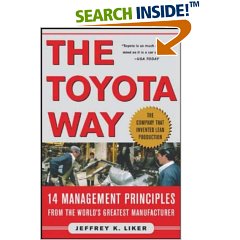
This reminds me of one of Toyota’s management principles genchi genbutsu “go and see for yourself”. This principle states that unless you have seen and experienced something first hand, you will find it very difficult to truly evaluate it. There is a very good book on this topic, call The Toyota Way that I can recommend. Toyota

What struck me is that genchi genbutsu not only has usefulness in production, product management or trouble shooting, but in marketing, too. Unless you are yourself using the products that your company produces in the same way as your customers would, how can you truly understand what messages your product is sending out to your custumers and buyers? And if you don’t truly understand these messages, you will probably have a hard time to effectively market your products.


AddThis Social Bookmark Button

Zemanta Pixie